


Dr. Vinita Tekchandani Masters Degree In Oral & Maxillofacial Pathology
To keep your teeth in their new, straight positions, retainers play a vital role. A retainer is a custom-made device that holds teeth in place and prevents them from returning to their original positions. Without it, months or years of orthodontic work can be undone.
But retainers are not one-size-fits-all. There are several retainer types, each with its own benefits and limitations. Understanding these options can help you choose the right one for your smile and lifestyle.
After braces or aligners, your teeth and surrounding tissues need time to stabilize. The ligaments and bone around your teeth are still adjusting, and without a retainer, teeth naturally drift back to their old positions.
Wearing a retainer as prescribed by your orthodontist ensures:
Let’s explore the different retainer types commonly recommended by orthodontists:
One of the oldest and most recognized types, Hawley retainers consist of a thin metal wire in front of the teeth, connected to an acrylic base that rests against the roof of the mouth or behind the lower teeth.
Pros:
Cons:
These look similar to Invisalign trays and are made from transparent plastic that fits snugly over your teeth.
Pros:
Cons:
A permanent retainer is a thin wire bonded to the back of the front teeth (usually the lower ones). Unlike removable retainers, it cannot be removed.
Pros:
Cons:
Made by Invisalign, Vivera retainers are premium clear retainers manufactured with strong, durable materials. They are custom-fit using digital scans.
Pros:
Cons:
The right retainer depends on your lifestyle, budget, and orthodontist’s recommendation. Here’s a quick guide:
Your orthodontist may suggest a combination, such as a fixed retainer for the lower teeth and a removable clear retainer for the upper teeth.
No matter which type you choose, care is essential to maintain effectiveness:
Retainers are the unsung heroes of orthodontic treatment. While braces and aligners straighten teeth, retainers keep your smile in place for life. Each type has unique advantages, from Hawley retainers to clear plastic options, fixed retainers, and Vivera retainers.
The best choice depends on your lifestyle and your orthodontist’s guidance. Properly wearing and caring for your retainer ensures that your smile stays straight and healthy long after the braces come off.
In most cases, yes—teeth can shift even years after braces. Over time, your orthodontist may reduce wear time to just nights, but some form of retention is usually lifelong.
For removable retainers (Hawley, Essix, Vivera), remove them while eating. Permanent retainers stay in while you eat, but you should avoid biting into tough foods.
Skipping your retainer can lead to shifting teeth, undoing orthodontic results and possibly requiring re-treatment.
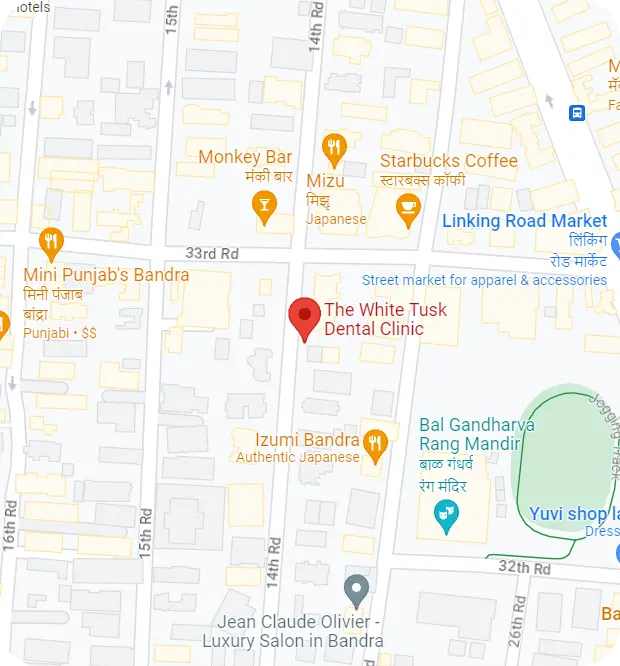
We are conveniently located near you in Bandra.